
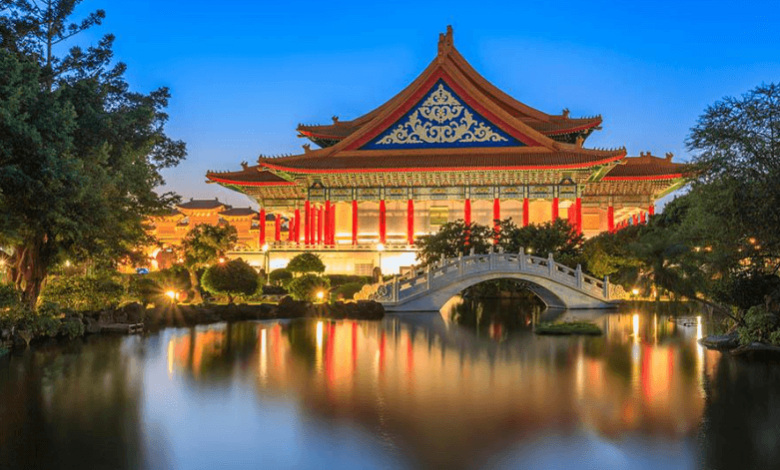
Late June, Taipei, 34°C, and stepping out of an MRT station at 2pm feels like walking into a wet towel. If that’s your first image of Taiwan in summer, good. The itineraries that work here are built around the weather rather than against it. I’ve been to the island three times, twice in the wet months, and the trips that fell apart were the ones where I’d planned a mountain hike for a Tuesday in August and trusted a forecast made on the Monday.
Taiwan’s typhoon season runs roughly July to September, and the plum rain front parks itself over the north in May and June. For the north, then, the practical summer window is late June through early July — or you accept soaked afternoons and build around mornings. The south is a different animal entirely: Kaohsiung and Tainan stay hot and mostly dry through summer while Taipei drowns. That asymmetry is the single most useful thing I know about planning here, and it inverts the usual advice to fly into Taoyuan and work south. So fly into Kaohsiung.
The weather decides the shape, so book one-ways
Because I’m usually arriving from Hong Kong and leaving from a different city eight weeks later, I price the two legs separately rather than as a return. High-speed rail connects Taipei to Kaohsiung in about 90 minutes for roughly NT$1,490, so the internal geography barely constrains you — the flights in and out do. China Airlines and EVA Air have both added summer capacity on the Hong Kong and Southeast Asia routes, which has made one-way pricing less brutal than it was in 2023, though a one-way Taipei–Hong Kong still runs about HK$900 in July against HK$1,400 return. Better than it was. Not a bargain.


Before I commit to anything I run the same checks, in this order:
- Does the price grid show the whole month, or am I being shown one date?
- What’s the one-way fare on each leg separately, with baggage?
- Which airport pairs actually have a direct flight that day, not a connection through Manila?
- What’s the cancellation window if a typhoon grounds the whole thing?
If you’re coming in from Hong Kong, which is how I usually arrive, the southern entry point is genuinely worth comparing against Taoyuan, because the fares diverge in ways that aren’t obvious from the map, and Kupi.com’s Hong Kong – Kaohsiung flight comparison is the sort of thing I’d open in a second tab while I’m deciding. Check the grid, then close it.
See also: Women’s Leather Travel Bags: Stylish and Practical Choices
What the itinerary actually looks like
Four weeks, for me, splits roughly three ways. Taipei first, because the museums and the food are indoor-friendly when the rain comes, and you want the city days front-loaded while you still have patience for a metro system. Then the central mountains, Alishan or the Taroko area depending on landslide reports, which you should check properly rather than assume, because heavy rain closes trails and the closures aren’t always well advertised. Then the south, Kaohsiung and Tainan, timed so you’re not there in the worst of the afternoon heat. In July that means indoors between roughly 11am and 3pm. No arguing with it.
Two weeks is tighter but workable if you drop the mountains. A week is Taipei plus one other city, and honestly, don’t try to do more, because the transit time eats the trip.
Where flying loses
Here’s the thing nobody selling you a ticket will say: if your whole Taiwan trip is Taipei and Kaohsiung, the high-speed rail beats flying outright. City centre to city centre, no security queue, no baggage surcharge, and you can work on the train. Flying between those two cities only wins if you’re connecting onward internationally from Kaohsiung. That’s the case where a one-way into Taoyuan and a one-way out of Kaohsiung makes sense, and it’s the trip I’d book. Rail for the island, one-ways for the edges.